Dashboard Warning Lights Explained for Rotherham Drivers
Engine warning light on in Rotherham? What it can mean, when it's safe to drive, and how we find the fault at our Greasbrough Road workshop.
That Little Orange Light Is Trying to Tell You Something
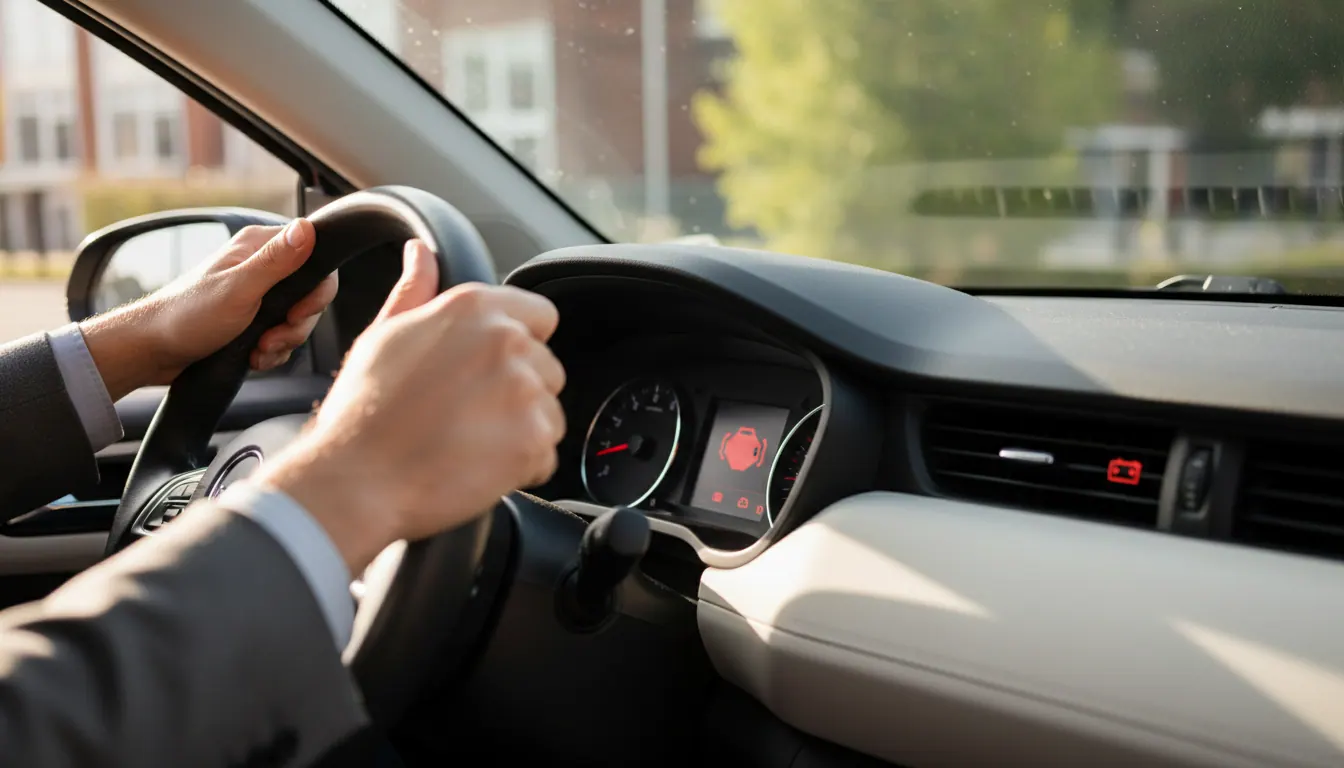
Your engine management light pops on and your stomach drops. Do you pull over, carry on to work, or get the car booked in straight away? The honest answer is: it depends on what's triggered it.
The engine warning light (also called the engine management light or check engine light) is your car's way of saying the on-board computer has logged a fault. It could be something minor, or it could point to something that needs attention before it gets worse. The only way to know for certain is to read the fault codes and then look at the car properly.
That's exactly what we do at DC Automotive Garage Services, from our workshop at Unit 3, Primrose Park on Greasbrough Road. Advanced fault finding is one of our core services.
What Can Cause the Engine Warning Light to Come On?
Modern cars monitor dozens of systems, and any one of them can log a fault and trigger the light. Common causes include:
- Oxygen (lambda) sensor faults. These sensors monitor exhaust gases. When they fail, fuel economy can drop and emissions rise.
- Mass airflow sensor. It measures how much air enters the engine. A dirty or faulty sensor can cause rough running and poor performance.
- Catalytic converter issues. Often linked to another fault upstream, such as a misfire or a failing sensor.
- EGR valve faults. Particularly common on diesels that do a lot of short trips around town.
- Spark plugs or ignition coils. Worn plugs or a failing coil will cause misfires and often trigger the light.
- Throttle body or fuel injector faults. These can cause hesitation, a poor idle or a loss of power.
- Turbo boost pressure faults. Common on turbocharged petrol and diesel engines.
- Timing chain wear. On some engines, a stretched chain or worn tensioner will log a fault before it becomes a major problem.
- A loose or damaged fuel filler cap. It sounds daft, but it happens.
You won't know which of these it is just by looking at the light. Some faults are quick to put right. Others need proper investigation. That's why diagnostics matter.
What Happens When You Bring Your Car In
We plug in to read the fault codes stored in your car's engine control unit. That gives us a starting point, not the final answer. A fault code tells us which system or sensor has flagged an issue. It doesn't tell us whether the problem is the sensor itself, the wiring, the part it monitors, or something upstream throwing the reading out.
So we look further. We check the live data, test components where needed and work out the root cause. Then we explain what we've found in plain English and talk you through the repair before any work goes ahead. Because the diagnostics and the repairs happen in the same workshop, you're not passed from one place to another.
Here's what Sammy Hellewell wrote about us on Facebook:
"Excellent mechanic. Fantastic workmanship. Quickly diagnosed the issue with our car, ordered the parts and fitted the same day."
— Sammy Hellewell, via Facebook
Can You Drive with the Engine Warning Light On?
It's the question everyone asks, so here's a straight answer.
If the light is on but steady (not flashing), and the car feels normal: you can usually drive carefully to a garage, but don't leave it too long. Get it checked as soon as you can.
If the light is flashing: stop driving as soon as it's safe to do so. A flashing engine light usually means an active misfire, and carrying on risks damaging the catalytic converter, which turns a small fault into a much bigger job.
If the engine light is on alongside other warnings (oil pressure, temperature or battery): treat it as more urgent. Pull over safely and check before driving any further.
If the car is running badly, losing power, overheating or making unusual noises: don't ignore it. Call us on 07984 242006 before driving further.
A steady light with no other symptoms isn't always an emergency, but it's never something to put off indefinitely. Faults that start small can develop into bigger problems if they're left.
Why a Code Reader on Its Own Isn't the Whole Answer
Plug-in code readers are easy to get hold of, and they have their place. If you already know the code before you come to us, that's fine, and it's handy to mention it when you get in touch.
But a code is just the starting point. It tells you which system flagged a fault, not the cause, how serious it is, or which part needs replacing. Swapping parts based on a code alone is a common way to replace the wrong thing and still have the light on afterwards. Proper fault finding means confirming the cause on the car itself before anything is replaced.
Other Warning Lights Worth Knowing
The engine light isn't the only one that matters:
- Oil pressure (red oil can): stop as soon as it's safe and switch off. Low oil pressure can damage an engine quickly.
- Temperature (red thermometer): the engine may be overheating. Stop safely and let it cool before checking anything.
- Battery (red battery symbol): usually a charging fault. The car may keep running for a while, but it could leave you stranded. Batteries are something we look after too: reliable starts, every time.
- Brake warning (red circle with an exclamation mark): could be low brake fluid or a handbrake issue. Get it checked before relying on the brakes.
- ABS (amber): your normal brakes should still work, but the anti-lock system may not. Have it looked at soon.
As a rule of thumb, red means stop and amber means get it checked soon.
Local to Rotherham
We're at Unit 3, Primrose Park on Greasbrough Road, handy for drivers across Rotherham. We work on all makes and models.
Frequently Asked Questions
Can I drive my car with the engine warning light on? It depends. A steady light with no other symptoms and a car that feels normal usually means you can drive carefully to a garage, but book it in soon. A flashing light means stop driving as soon as it's safe. If the car feels wrong in any way, don't risk it.
What can cause an engine warning light to come on? Lots of things: oxygen sensor faults, EGR valve issues, spark plug or coil failures, mass airflow sensor faults, fuel system problems, turbo faults and timing chain wear, among others. The reliable way to find out is proper diagnostics.
Will a code reader tell me what's wrong? It will give you a fault code, which is a useful starting point. It won't confirm the root cause or which part needs replacing. That takes proper fault finding on the car.
Can you fix the fault once you've found it? Yes. We carry out repairs in the same workshop, so once we know what's wrong we'll talk you through putting it right.
Get It Checked Properly
If your engine warning light is on, don't sit on it hoping it'll go away. Sometimes it does. More often it doesn't, and waiting usually means a bigger job later.
Bring it to us at Primrose Park, call 07984 242006, or email dcautomotivegaragerepairs@gmail.com. We'll find the fault, tell you straight what's wrong, and get it sorted. Expert care. Quality work. Trusted service.