Brake Fluid and Hydraulic System Checks: What Drivers Should Know in Rotherham
Brake fluid explained for Rotherham drivers. When to change it, warning signs to watch for, and how we help at our Greasbrough Road workshop.
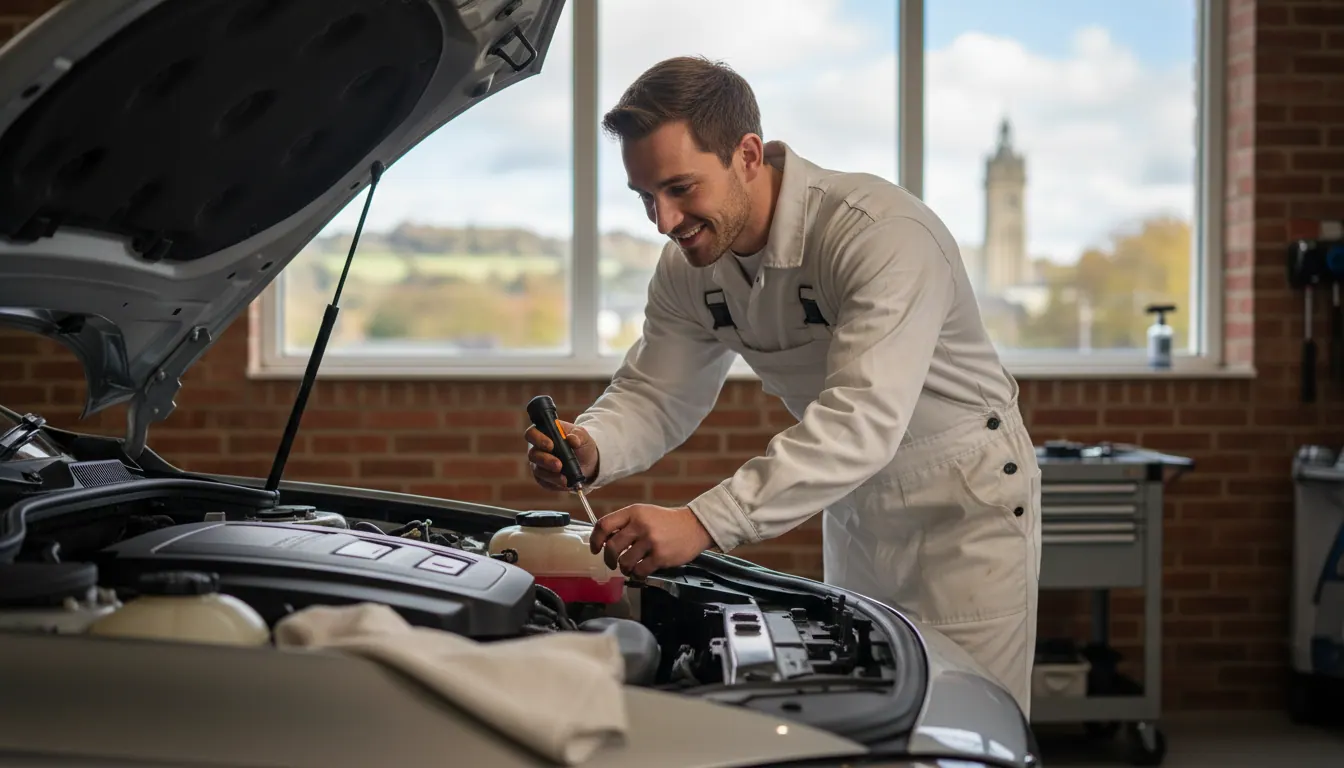
Brake fluid is not something most drivers think about, until something goes wrong
Your brakes are the most important safety system on your car. Yet the fluid that makes them work is one of the most overlooked items in routine maintenance. Most drivers in Rotherham check their oil, maybe their tyre pressures, but brake fluid? It tends to get forgotten until a warning light comes on or the pedal starts feeling wrong.
We see this regularly at our workshop on Greasbrough Road. A car comes in for something else entirely, and when we check the brake fluid it is dark, contaminated or sitting below the minimum line. The driver had no idea.
This article explains what brake fluid actually does, how to spot a problem before it becomes dangerous, and what we do about it at DC Automotive Garage Services.
What brake fluid actually does
When you press the brake pedal, you are not directly squeezing the pads against the discs yourself. You are pushing fluid through a sealed hydraulic system, and that fluid transfers the force to the callipers, which then clamp the pads onto the discs and slow the car down.
For that to work properly, the fluid needs to stay at the right level and remain uncontaminated. Brake fluid is hygroscopic, which means it absorbs moisture from the air over time. That is simply how it behaves, and it happens in every car.
The problem with moisture is twofold:
- It lowers the boiling point of the fluid. Under hard braking, the fluid heats up. If it has absorbed too much water, it can boil, and boiling fluid creates gas bubbles. Gas compresses where fluid does not. That is what causes a spongy or sinking brake pedal.
- It accelerates corrosion inside the hydraulic system, including the callipers, master cylinder and brake lines.
Old, moisture-laden fluid is not just an MOT concern. It is a genuine safety issue.
Warning signs that your brake fluid needs attention
You might not be able to see inside your brake lines, but your car gives you signals. Watch for:
A soft, spongy or low brake pedal. If the pedal travels further than usual before the brakes bite, or it feels like pressing into a sponge rather than something firm, that is a red flag. It can point to air or vapour in the system, often caused by degraded fluid.
The brake warning light on the dashboard. This can indicate low fluid level. Do not ignore it. If it comes on while you are driving, check the reservoir as soon as it is safe to do so.
Discoloured fluid. Fresh brake fluid is pale yellow and almost clear. Old fluid turns dark brown or even black. You can see the reservoir without opening it on most cars. If it looks murky, it needs changing.
The car pulling to one side under braking. This can have several causes, but contaminated fluid leading to uneven calliper performance is one of them.
If you are unsure what a warning light is telling you, our article on dashboard warning lights explained for Rotherham drivers covers the most common ones in plain English.
How often should brake fluid be changed?
Most manufacturers recommend a brake fluid change every two years, regardless of mileage. That is because moisture absorption happens with time, not just use. A car that does low mileage around Herringthorpe or Moorgate every day is still absorbing moisture into the fluid, just the same as a higher-mileage car.
Some newer cars have a brake fluid condition sensor that tells you when the fluid needs changing. Most do not. If you cannot remember the last time yours was changed, or you have just bought the car second-hand and have no service history for it, it is worth getting it checked.
We can test the moisture content of your fluid quickly when your car is in with us. It takes minutes and removes the guesswork entirely.
Can I drive if my brake fluid is low?
Strictly speaking, you can drive a short distance with low brake fluid to reach a garage safely, but we would not recommend driving normally on it. Low fluid can mean there is a leak somewhere in the system. If the level drops further while you are driving, your brakes could fail.
If the level is low and you can see no obvious leak, top it up to the maximum line with the correct fluid type for your car (check your handbook) and get it to us as soon as you can. Do not leave it.
If the level is critically low or the pedal feels wrong, do not drive it. Call us on 07984 242006 and we can advise you on what to do next.
Can you just buy brake fluid from a petrol station?
Yes, most petrol stations stock brake fluid, and in a pinch it will do the job of topping up the level. But there are a few things to be aware of.
First, brake fluid comes in different specifications, most commonly DOT 3, DOT 4 and DOT 5.1. Using the wrong type can damage seals in the hydraulic system. Always check your car's handbook before buying.
Second, topping up does not address the underlying issue if the fluid is old and moisture-contaminated. You are just adding fresh fluid on top of degraded fluid. The system still needs a proper flush and refill.
Third, if the level was low because of a leak, buying a bottle at the petrol station is not fixing anything. The leak will still be there.
A proper brake fluid change means draining the old fluid out completely and replacing it with fresh fluid throughout the entire system. That is what we do in the workshop, and it is the only way to know the job has been done properly.
What a brake fluid change involves at our workshop
When you bring your car in to us at Unit 3 primrose park greasbrough road, Rotherham, S601RH, we start by checking the current fluid condition and level. If a change is needed, we bleed the brakes at each corner of the car, pushing the old fluid out and replacing it with fresh fluid to the correct specification.
While we are doing that, we will also check the condition of your brake pads, discs and callipers. Brake fluid problems do not always travel alone. Worn pads or seized callipers can put extra heat into the system, which degrades fluid faster. If we spot anything that needs attention, we will tell you plainly what it is and what it involves, no pressure, just the facts.
We work on all makes and all models. It does not matter whether you are driving something older from Kimberworth or a newer car from Broom or Clifton. We will give it the same care.
"Excellent mechanic. Fantastic workmanship. Quickly diagnosed the issue with our car, ordered the parts and fitted the same day." , Sammy Hellewell, via Facebook
That is exactly how we approach every job, brakes included. Find the issue, sort it properly, keep you moving.
For a broader look at brake wear and when to act, our article on brake pads and discs wearing out: signs to spot before your next MOT in Rotherham is worth a read alongside this one.
Frequently asked questions
How do I know if my brake fluid needs changing? The simplest checks are colour and level. If the fluid in the reservoir looks dark brown rather than pale yellow, it is overdue. If the level is below the minimum line, that needs investigating too. A spongy or low brake pedal is a more urgent sign that something is wrong with the hydraulic system. Bring it in and we can test the moisture content and check the whole system over.
Can I drive if my brake fluid is low? Only to reach a garage, and only if the pedal still feels normal and firm. If the pedal is soft, sinking or the car is pulling under braking, do not drive it. Low fluid can indicate a leak, and if the level drops further the brakes can fail. Get in touch with us and we will advise you on the safest next step.
Can you just buy brake fluid at a petrol station and top it up yourself? You can, but make sure you use the correct specification for your car (check the handbook) and be aware that topping up does not replace a proper flush. Old, moisture-laden fluid still needs draining out. If the level was low because of a leak, topping it up does not fix the leak either.
How often should brake fluid be changed in Rotherham? Every two years is the standard recommendation for most cars, regardless of mileage. Moisture absorption happens with time, not just use. If you have no record of when yours was last changed, it is worth getting it tested. We can check the condition of your fluid quickly when your car is in with us.
Get your brakes checked at our Rotherham workshop
Brake fluid is cheap to sort. Leaving it too long is not worth the risk, either to your safety or to the condition of the rest of your hydraulic system.
If you are based anywhere across Rotherham, whether that is Eastwood, Masbrough, Greasbrough or anywhere else in the town, we are right here on Greasbrough Road and ready to help. Call us on 07984 242006 to book your car in or to ask us anything about your brakes. We will give you a straight answer and sort the job properly.